Description
ESP32-S3 DevKitC-1 N16R8 Development Board in Pakistan
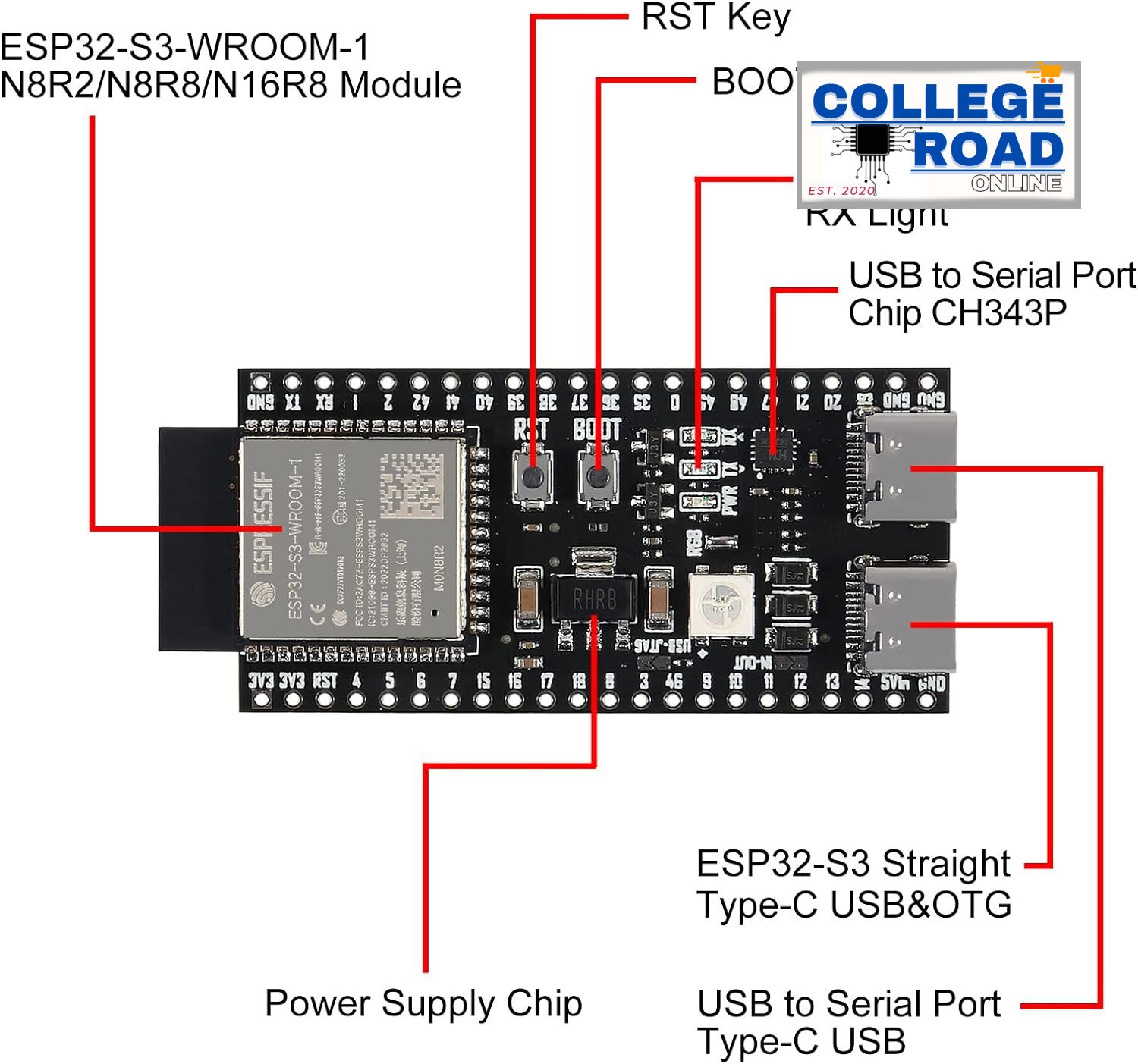
Looking for the ESP32-S3 DevKitC-1 N16R8 in Pakistan? This is a high-spec ESP32-S3 development board built around the ESP32-S3-WROOM-1 module. As a result, it gives you a dual-core processor with generous flash and RAM for memory-heavy projects. Plus, Collegeroad-Online delivers it fast across Rawalpindi, Islamabad, and nationwide.
Key Features
- Processor: Dual-core Xtensa LX7, running at up to 240MHz
- Memory: 16MB Flash plus 8MB Octal PSRAM — in fact, the “N16R8” naming tells you exactly this: 16MB Flash, 8MB PSRAM
- On-chip RAM: 512KB SRAM
- Wireless: Includes built-in 2.4GHz WiFi (802.11 b/g/n) and Bluetooth 5 (LE)
- USB: Offers native USB-C support for both programming and USB OTG device/host applications, so you won’t need a separate UART driver chip
- GPIO: A rich set of exposed I/O pins, pin-compatible with the standard ESP32-S3-DevKitC-1 layout, makes it easy to expand with peripherals
- Software support: Works smoothly with Arduino IDE, ESP-IDF, and MicroPython
Why the N16R8 Variant Matters
Compared to the standard 8MB flash version, the extra flash on this ESP32-S3 N16R8 board makes a real difference. For instance, it supports OTA (over-the-air) firmware updates that need two full firmware partitions at once, large web interfaces stored in SPIFFS/LittleFS, and applications that embed fonts, images, or ML models directly into firmware. Similarly, the 8MB PSRAM is important for frame-buffer-heavy work like camera streaming and audio buffering. Therefore, if you’re running TensorFlow Lite Micro or similar AI inference models at the edge, this extra memory becomes a real requirement rather than a luxury.
Who This Is For
- Makers and engineers building AI/ML-at-the-edge projects, such as image classification or wake-word detection
- Camera and video streaming projects that need extra PSRAM bandwidth
- IoT and home automation builds that need solid WiFi/BLE, plus room to grow
- Anyone upgrading from a classic ESP32 or ESP8266 board who has hit memory limits
Setup note: in Arduino IDE, make sure PSRAM mode is set to OPI PSRAM rather than the default QSPI — otherwise, the board won’t correctly detect the full 8MB PSRAM.
Finally, pair it with a camera module for vision projects, or otherwise browse our full development boards category.


Reviews
There are no reviews yet.